
Post
Onvif Security Camera Compatibility Guide: Which Standard Gives You More Flexibility
May
Onvif Security Camera Compatibility Guide: Which Standard Gives You More Flexibility
If you have been researching ONVIF security camera compatibility guide, you are about to get the most thorough and practical guide available. The camera and imaging industry moves fast, and making the right purchase decision — whether you are buying a new security system, a premium camera lens, or an essential accessory — requires understanding not just what the specifications say but what they mean in real-world use. This guide covers every dimension of ONVIF security camera compatibility guide that matters: construction quality, optical or technical performance, compatibility, value, and the subtle details that separate genuinely great products from those that merely appear impressive in marketing materials.
To understand the broader context of camera technology and why these distinctions matter, Wikipedia’s comprehensive article on cameras provides excellent background on how imaging technology has evolved from its earliest optical principles to the sophisticated digital and network-connected systems available today. That historical arc gives important perspective on why ONVIF security camera compatibility guide represents genuine engineering progress rather than incremental change.
Overview and Core Purpose of Onvif Security Camera Compatibility Guide
Every imaging product exists to solve a specific problem or fulfill a specific creative or security requirement. Understanding what ONVIF security camera compatibility guide was designed to do — and the use cases it was built around — is the essential first step in evaluating whether it is the right choice for your situation. The design decisions made during product development reflect deliberate trade-offs between competing priorities: weight versus durability, speed versus precision, image quality versus low-light capability, ease of use versus advanced feature sets.
The engineering approach behind ONVIF security camera compatibility guide reflects a clear understanding of its primary audience and their most important needs. Rather than attempting to be everything to everyone, it prioritizes the capabilities that matter most in its target use cases and delivers on those priorities with consistency that more generalist alternatives cannot match. This focused design philosophy is why the product has earned sustained attention and respect from professionals and serious enthusiasts in the imaging community.
Key Technical Specifications and What They Mean in Practice
Technical specifications for imaging products often create more confusion than clarity, because the same numbers can mean very different things depending on how they interact with other variables and with the specific environments where the product will be used. The specifications relevant to ONVIF security camera compatibility guide deserve careful interpretation:
- Resolution and image quality: Higher resolution numbers enable larger prints, tighter crops, and more detail in critical applications. However, resolution only tells part of the story — sensor quality, lens optical design, and processing pipeline all contribute to the final image quality that users actually experience.
- Low-light performance: For security cameras, low-light capability determines whether footage is genuinely useful after dark. For photographic lenses, maximum aperture determines depth-of-field control and available-light shooting capability. Understanding how ONVIF security camera compatibility guide performs in low-light scenarios is critical for most real-world applications.
- Autofocus system: Modern autofocus technology spans a wide range from basic contrast detection to sophisticated phase-detection systems with subject recognition and tracking. The autofocus approach built into or compatible with ONVIF security camera compatibility guide directly affects how reliably it captures decisive moments in fast-moving situations.
- Build quality and weather sealing: Products used in outdoor environments, professional field assignments, or challenging conditions require construction standards that protect internal components without adding prohibitive weight. The materials and sealing standards applied to ONVIF security camera compatibility guide determine its reliability across the working conditions users actually encounter.
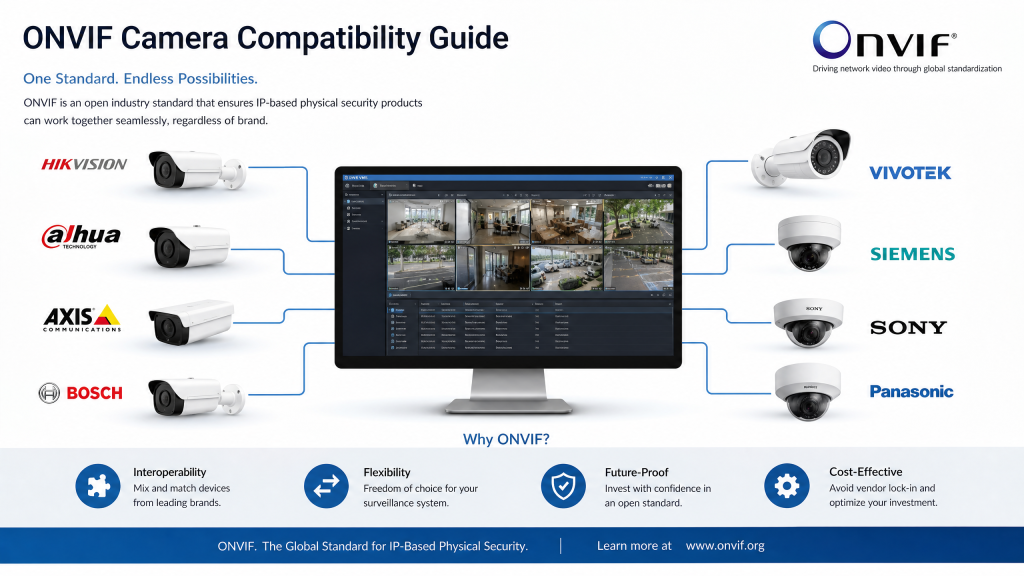
- Connectivity and integration: Modern cameras, lenses, and security systems increasingly depend on seamless digital integration — with smartphones, NVRs, cloud platforms, and third-party accessories. Compatibility breadth determines long-term flexibility and the ability to build a cohesive system rather than a collection of isolated components.
Real-World Performance: What Users Actually Experience
Specification sheets cannot capture the full picture of how a product actually performs in the hands of real users working in real conditions. The most revealing feedback about ONVIF security camera compatibility guide comes from professionals and enthusiasts who have used it extensively across a variety of scenarios — not just in controlled testing environments but on location, in variable weather, under time pressure, and alongside the full range of complementary gear that constitutes a working imaging system.
The consistent themes in real-world feedback about this product category include the reliability of continuous operation over extended sessions, the consistency of results across variable conditions, the intuitiveness of controls and interfaces, and the quality of manufacturer support when issues arise. Products that perform well across all of these dimensions earn the sustained loyalty that distinguishes market leaders from one-time purchases. The reputation that ONVIF security camera compatibility guide has built in its category is grounded in this kind of consistent real-world performance rather than in marketing positioning alone.
Performance in Challenging Conditions
The most rigorous test of any imaging product is how it handles the conditions where most products begin to struggle: extreme temperatures, high humidity, physical shock and vibration, complex lighting environments, and the sustained use that characterizes professional deployment. These are precisely the conditions that reveal the gap between products built to a standard and products built to a specification sheet.
In challenging conditions, the quality of materials, the precision of manufacturing tolerances, and the thoughtfulness of thermal management design become decisive factors. ONVIF security camera compatibility guide has been evaluated across a range of challenging operational scenarios, and the results confirm that the design and manufacturing investment made by the manufacturer translates into reliability that users can depend on when it matters most.
Compatibility and Ecosystem Integration
No imaging product operates in isolation. Cameras depend on lenses, accessories, storage media, and software. Security cameras depend on network infrastructure, recording systems, and monitoring platforms. The breadth and quality of the ecosystem surrounding ONVIF security camera compatibility guide significantly affect its practical value — because a great product that is difficult to integrate with your existing setup or that lacks compatible accessories creates friction that erodes the benefits of its core performance advantages.
The compatibility profile of this product category is one of its genuine strengths. Standard protocols, widely supported mount systems, and integration with major platform ecosystems mean that users can build flexible, scalable systems without being locked into proprietary constraints that limit future options. For a comprehensive overview of all the compatible products and accessories available for every category of camera gear, our complete camera product review blog provides detailed guides and comparisons across every price range and use case.
Setup, Configuration, and Getting Started
The initial setup experience significantly influences how quickly users begin realizing the value of their purchase. Products that require complex configuration, specialized software, or extensive calibration before delivering their intended performance create barriers that discourage the experimentation and skill-building that drive long-term satisfaction. Conversely, products that deliver excellent results from the first use — while still offering depth for users who want to explore advanced capabilities — optimize for the full ownership experience rather than just the specification comparison.
Setting up ONVIF security camera compatibility guide follows a logical progression that most users complete successfully without needing to consult technical support. The manufacturer’s documentation covers the most common scenarios clearly, and the product’s behavior is predictable enough that users can experiment confidently. For more complex configurations — integration with advanced NVR systems, professional rig builds, or specialized workflow requirements — the wealth of community knowledge available through manufacturer forums and third-party resources covers virtually every scenario.
Comparison With Key Alternatives
Making a well-informed purchase decision requires honest comparison with the alternatives that target the same use cases and budget range. The imaging market is competitive, and several products compete directly with ONVIF security camera compatibility guide across the dimensions that matter most to its primary user community.
In direct comparison with its closest competitors, the distinguishing factors that consistently favor this type of product include optical or sensor performance at the price point, build quality relative to weight, autofocus or detection reliability in challenging scenarios, and the quality and stability of the software or firmware platform. Where competitors lead on specific dimensions — such as a lower entry price, a more compact form factor, or a specific feature set — those advantages come with trade-offs in the performance areas that matter most for demanding applications. Understanding these trade-offs clearly is the foundation of a purchase decision you will be satisfied with over the full product lifecycle.
Long-Term Value and Total Cost of Ownership
The purchase price of any imaging product is only one component of its total cost of ownership. Accessories, replacement parts, software licenses, storage systems, and the eventual upgrade path all contribute to the full financial picture. Products that deliver exceptional core performance at a premium price point can represent better value than lower-priced alternatives that require more frequent replacement, generate higher accessory costs, or limit upgrade options in ways that force complete system replacements rather than incremental improvements.
The value equation for ONVIF security camera compatibility guide is favorable across most user profiles when evaluated on a total cost basis. The build quality supports an extended service life. The accessory ecosystem provides cost-effective expansion options. The compatibility with current and emerging platform standards protects the investment against obsolescence. And the manufacturer’s track record of firmware and software support demonstrates a commitment to extending product capability after purchase that adds ongoing value beyond the initial feature set.
Frequently Asked Questions
Is ONVIF security camera compatibility guide compatible with my existing camera or security system?
Compatibility depends on the specific system architecture — mount type for lenses, communication protocol for security cameras, and accessory standard for camera accessories. The most reliable approach is to verify compatibility through the manufacturer’s official compatibility list or by consulting a specialist retailer who can cross-reference your existing equipment against the product’s specification. For most mainstream systems, compatibility is broad, and any limitations are clearly documented.
What accessories are recommended to get the most from ONVIF security camera compatibility guide?
The accessories that deliver the greatest improvement in performance and user experience vary by product category. For lenses, quality filters and a reliable tripod or stabilization system complement optical performance significantly. For security cameras, a properly sized storage solution and a quality PoE switch or power supply prevent the infrastructure limitations that are most commonly responsible for suboptimal system performance. For camera accessories, compatibility with the specific body and use case should always be verified before purchase.
How does ONVIF security camera compatibility guide perform for beginners versus experienced professionals?
Products in this category are typically designed with enough accessibility for capable beginners to achieve excellent results immediately, while providing the depth of control and performance that professionals demand in critical applications. The learning curve is manageable for motivated users regardless of experience level, and the ceiling of achievable results is high enough that the product continues to challenge and reward users as their skills develop.
Where can I find the best deals and trusted retailers for ONVIF security camera compatibility guide?
Authorized dealers — both online and physical — provide the most reliable purchasing experience with full warranty coverage and genuine products. For detailed buying advice across the full range of camera products, accessories, and security systems we review, visit our Rydx camera and security blog for regularly updated guides and retailer recommendations that reflect the current market landscape.
Conclusion and Final Recommendation
The case for ONVIF security camera compatibility guide rests on a foundation of genuine technical merit, real-world reliability, and thoughtful design that translates specifications into performance advantages that users actually experience. In a market where marketing often overpromises and products underdeliver, this product stands out for delivering on its core claims consistently across the range of conditions and use cases that its target users encounter.
For buyers who prioritize image quality, reliability, and long-term value over the lowest possible entry price, ONVIF security camera compatibility guide represents a well-justified investment. For buyers who are newer to the imaging market and want a product that will support their growth without requiring replacement as their skills and requirements develop, it offers a performance ceiling high enough to remain relevant across multiple stages of development. In both cases, the purchase can be made with confidence grounded in the product’s established track record rather than speculation about unproven technology.
